
Encode. Understand. Decide.
Turn domain expertise, data, and knowledge extracted from LLMs into explicit, computable models. Bayesia offers an integrated suite of ready-to-use software products for Bayesian network modeling, probabilistic reasoning, causal inference, simulation, risk analysis, and decision-making under uncertainty.
The Integrated BayesiaLab Ecosystem
The BayesiaLab ecosystem brings together software for Bayesian network modeling, machine learning, formalizing knowledge from LLMs and documents, graph visualization, browser-based model access, and programmatic integration. BayesiaLab is the flagship desktop product, complemented by Hellixia, BEKEE, HellixMap, WebSimulator, and Bayesia Engine API.
BayesiaLab
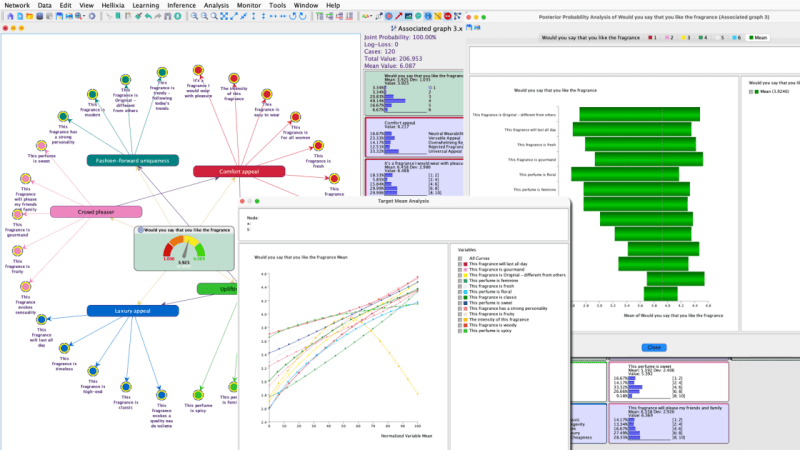
Flagship desktop software for constructing Bayesian network models from domain expertise, data, and knowledge extracted from LLMs, and for applying those models to reasoning, simulation, causal inference, optimization, and decision support.
Hellixia
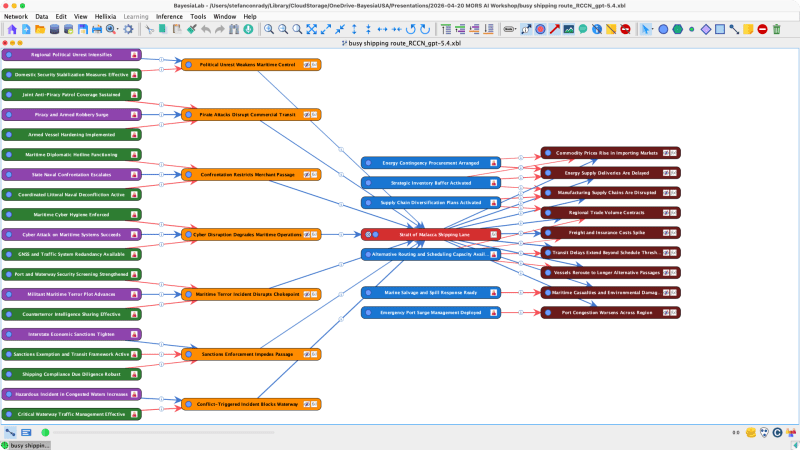
Hellixia formalizes knowledge from LLMs, prompts, and documents into semantic graphs, knowledge graphs, and causal Bayesian network models that can be refined in BayesiaLab and explored in HellixMap.
HellixMap
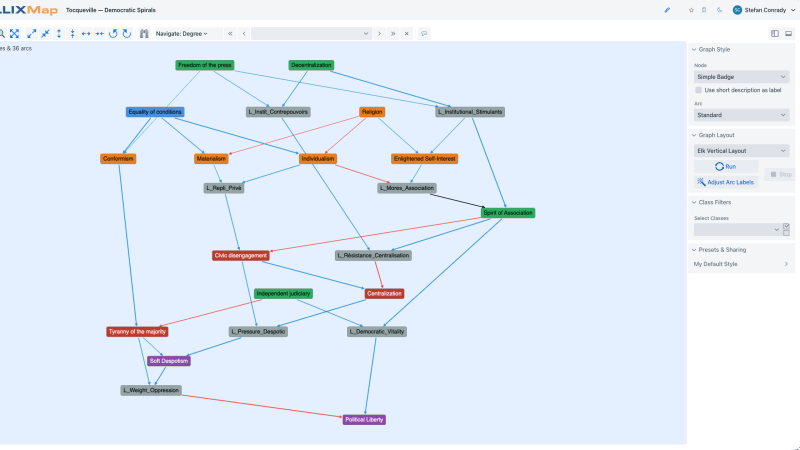
HellixMap provides browser-native exploration, publishing, and sharing for semantic graphs, knowledge graphs, and Bayesian networks.
WebSimulator
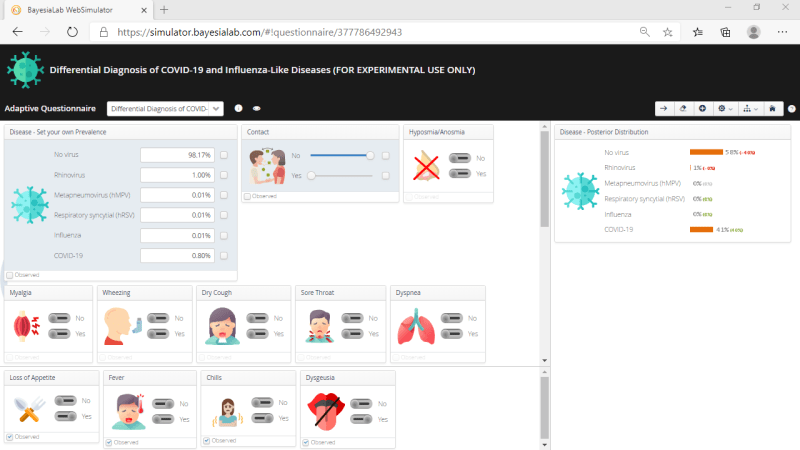
WebSimulator publishes BayesiaLab models as browser-based interfaces, making Bayesian network models available to stakeholders and end-users for scenario simulation, real-time inference, and adaptive questionnaires.
BEKEE
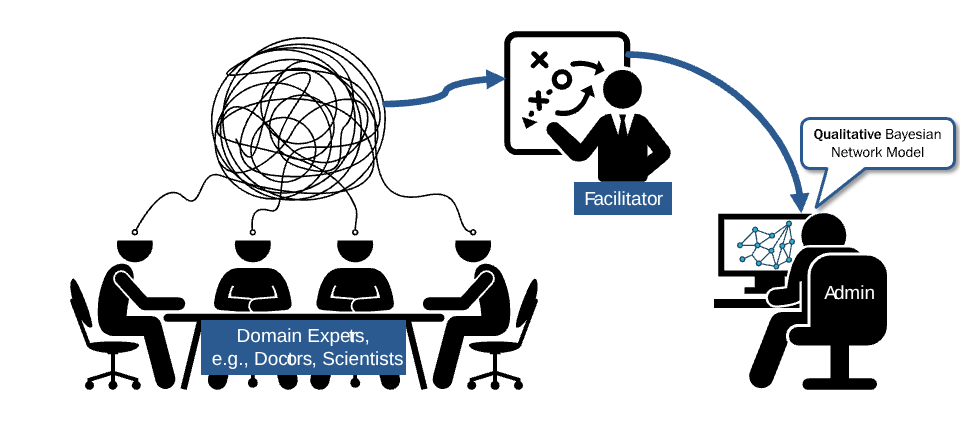
The Bayesia Expert Knowledge Elicitation Environment (BEKEE) provides structured web-based elicitation of expert knowledge for Bayesian network modeling. It captures individual perspectives through structured web questionnaires, supports formal comparison of viewpoints, and compiles those views into a computable Bayesian network.
Bayesia Engine API
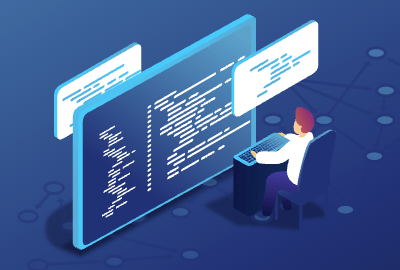
Bayesia Engine API provides programmatic access to BayesiaLab model construction, learning, and inference for embedded applications, production services, and enterprise workflows.
Specialized Solutions for Complex Large-Scale Systems
Built on specialized extensions of Bayesian networks, BEST and BRICKS help organizations structure expert knowledge, manage uncertainty, diagnose failures, assess risks, and support operational decision-making for complex, large-scale systems.
BEST

BEST (Bayesian Expert System for Troubleshooting) is a dedicated solution for diagnosing and resolving issues in complex systems. It enables technical teams to analyze symptoms, interpret failure patterns, and identify the most probable causes, supporting efficient and reliable corrective actions.
BRICKS

BRICKS (Bayesian Representation and Inference for Complex Knowledge Structuring) is designed for large-scale and interconnected systems where traditional flat models are insufficient. It provides reusable modeling patterns, system instantiation, and advanced inference optimization.
BayesiaLab
BayesiaLab is the flagship desktop software for constructing Bayesian network models from domain expertise, data, and knowledge extracted from LLMs, and for applying those models to probabilistic reasoning, diagnosis, causal inference, simulation, optimization, and decision support.
Knowledge Modeling
Graphically encode human knowledge as causal Bayesian networks.
Represent complex problems and their causal structure through visual structure modeling and probability elicitation.
Machine Learning
Learn Bayesian network structure, parameters, and clusters from data.
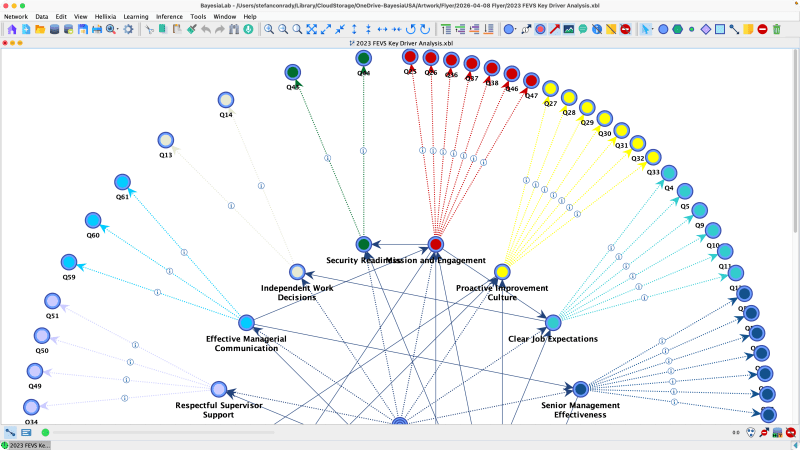
Use supervised and unsupervised workflows to learn model structure and parameters from empirical data.
Inference & Simulation
Reason from evidence for diagnosis, prediction, simulation, and intervention analysis.
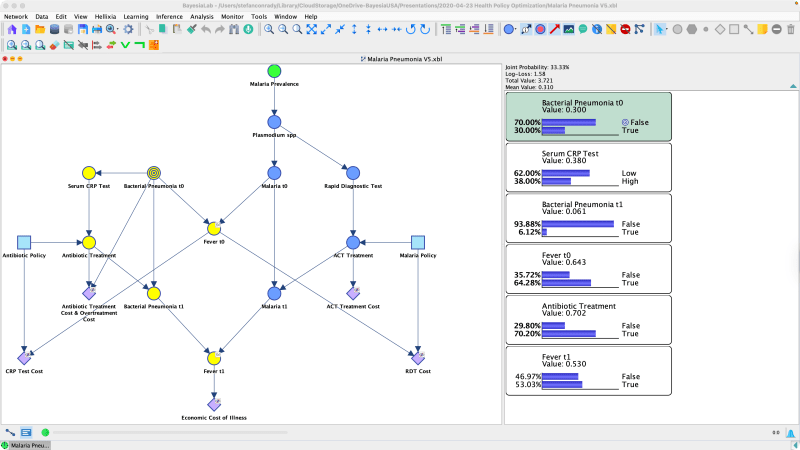
Perform evidence-conditioned inference across Bayesian network models, including observational and causal workflows.
Model Utilization
Make models usable through web interfaces, questionnaires, batch inference, and APIs.
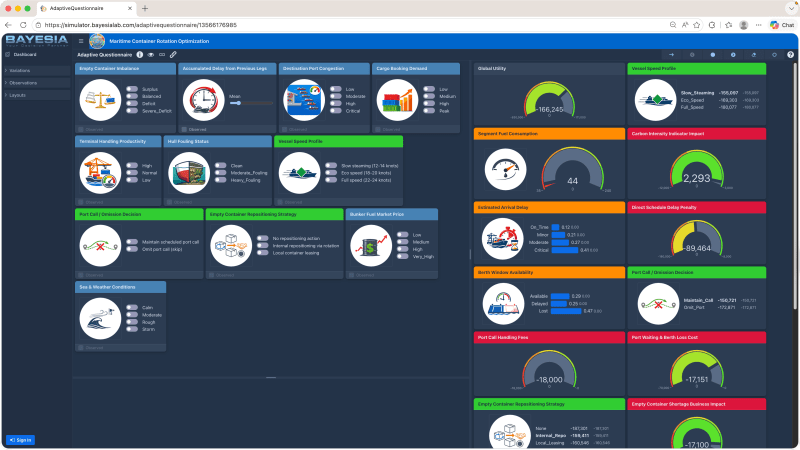
Use BayesiaLab models in WebSimulators, adaptive questionnaires, batch inference workflows, and embedded applications.
Knowledge Mining
Formalize knowledge from documents and LLMs into model structures.
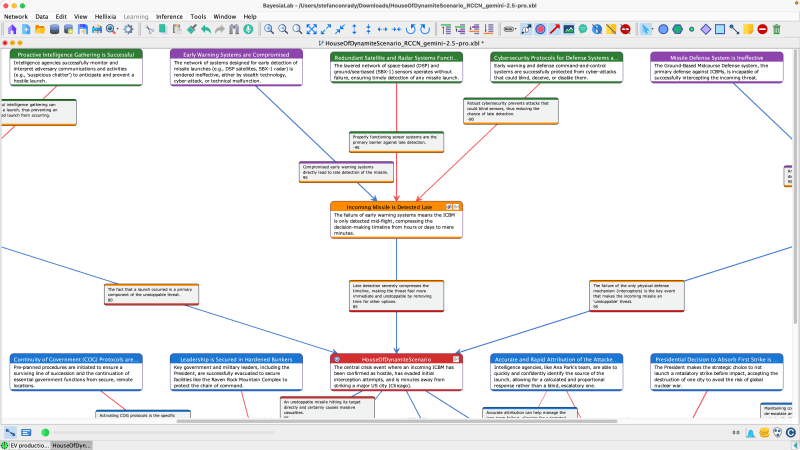
Transform documents, prompts, and LLM-derived knowledge into semantic graphs, knowledge graphs, and causal Bayesian network models.
Knowledge Communication
Communicate model structure and behavior through graph-native visualization.
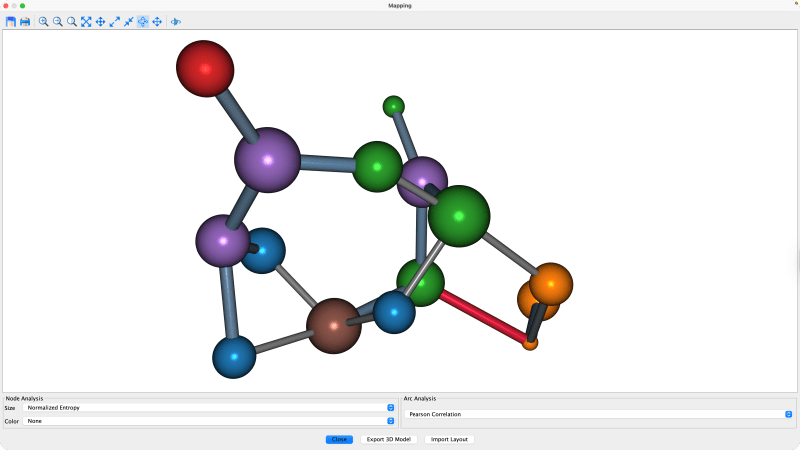
Use interactive graph representation, simulation, and visualization to inspect and communicate model dynamics.
Hellixia
Hellixia formalizes knowledge from LLMs, prompts, and documents into semantic graphs, knowledge graphs, causal networks, and Bayesian network models that can be refined in BayesiaLab and explored in HellixMap.
Prompt-to-Network
Start with a question, not a blank canvas.
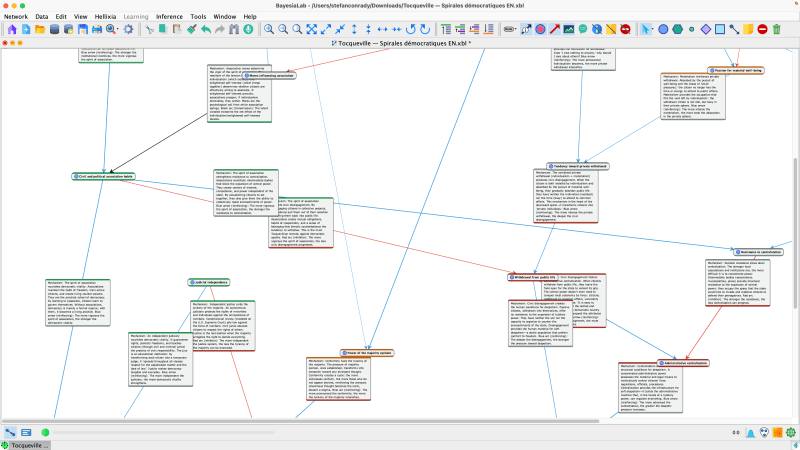
Hellixia can generate causal network structure from a prompt, including nodes, arcs, explanatory comments, and initial probabilistic scaffolding.
Document Analysis
Turn documents into structured model assets.
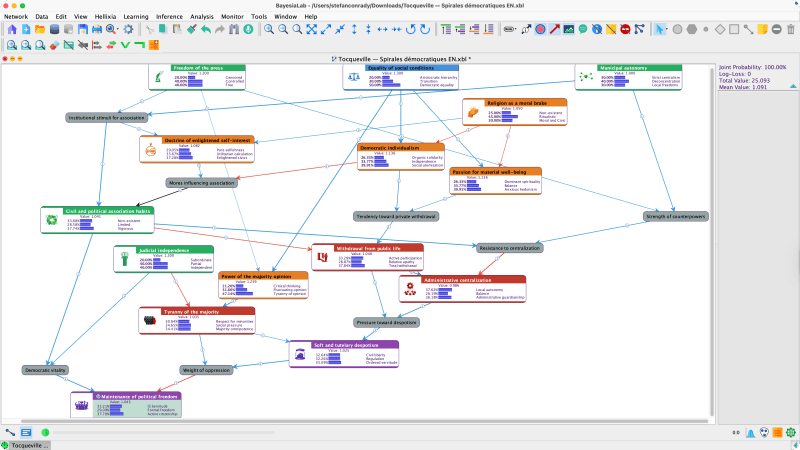
Analyze knowledge files and generate semantic flowcharts, causal semantic diagrams, knowledge graphs, causal networks, semantic networks, and doc-to-node outputs.
Semantic Scaffolding
Extract dimensions and organize them into coherent structure.
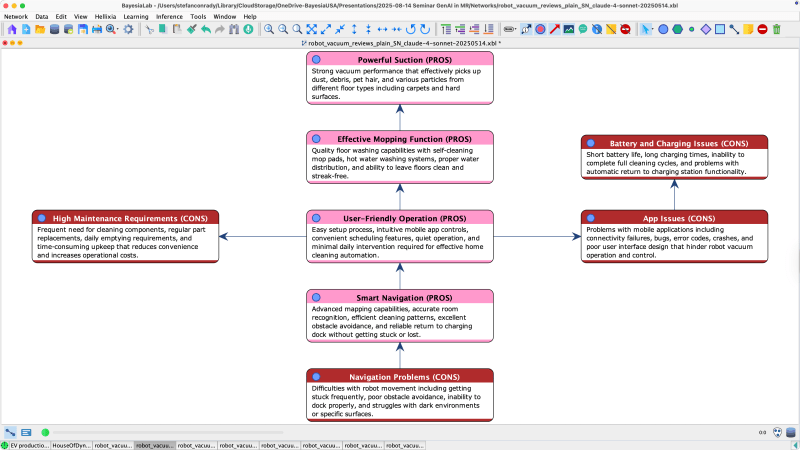
Use Hellixia to identify the main dimensions of a domain, generate embeddings, and build semantic structures that help analysts move from rough language to analyst-ready models.
Risk-Centric Modeling
Generate structures built for uncertainty and risk.
When the use case calls for it, Hellixia can focus on risk-centric causal networks that surface triggering events, controls, consequences, and mitigation actions.
Analyst Refinement
Use AI to accelerate structure, not to replace judgment.
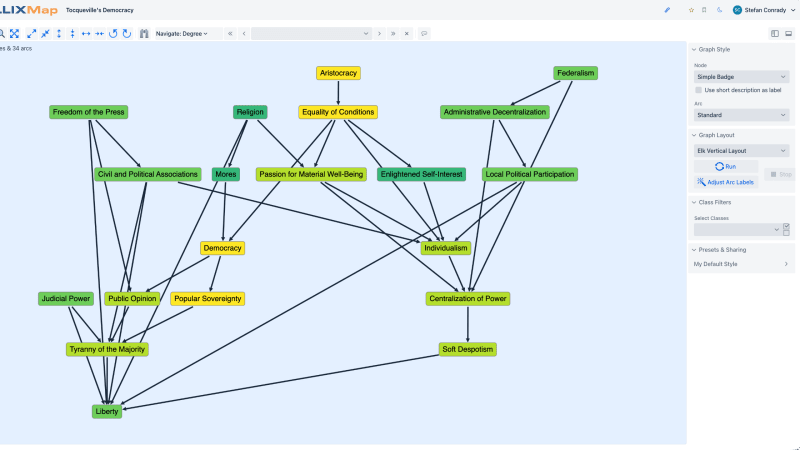
Hellixia helps analysts enrich, translate, comment, and refine generated model elements so LLM-derived structure becomes inspectable and usable.
HellixMap
HellixMap is a browser-native environment for exploring, publishing, and sharing semantic graphs, knowledge graphs, and Bayesian networks. It helps users navigate structured knowledge and communicate graph-based models interactively.
Graph Publishing
Publish complex graphs in a form that invites exploration.
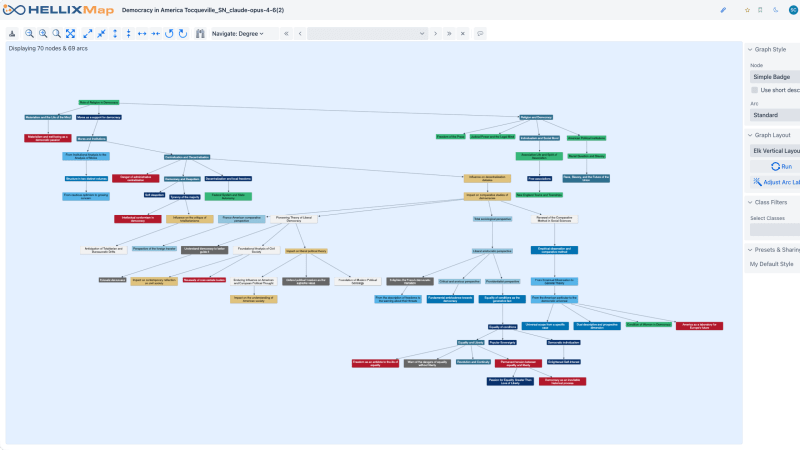
Turn models and knowledge graphs into interactive web experiences so teams, clients, and stakeholders can inspect structure directly instead of relying on static screenshots or slides.
Graph Navigation
Move through complexity without losing orientation.
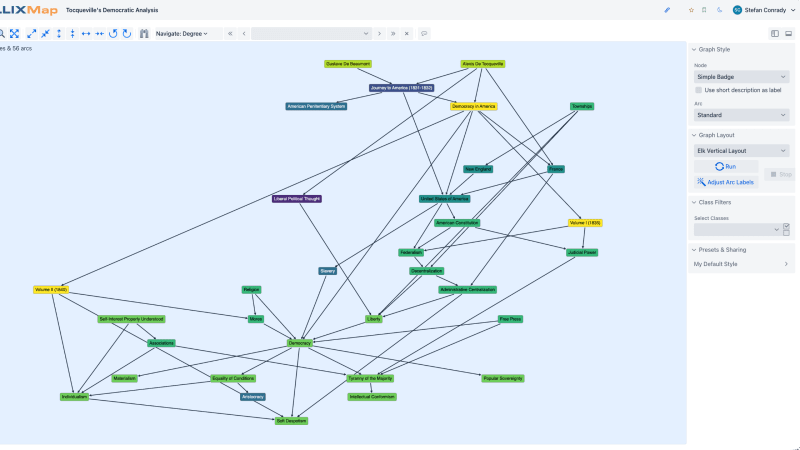
Use full-text search, neighborhood expansion, and semantic filtering to explore networks of any size while staying focused on the relationships that matter.
Prompt + Document Generation
Generate explorable graphs from questions and documents.

HellixMap integrates Hellixia to produce knowledge graphs, causal semantic diagrams, semantic flowcharts, causal networks, probabilistic networks, and risk-centric causal networks from unstructured content.
Sharing
Choose public visibility or private links.

Use HellixMap as a communication layer for public libraries, internal collaboration, or secure one-to-one sharing.
WebSimulator
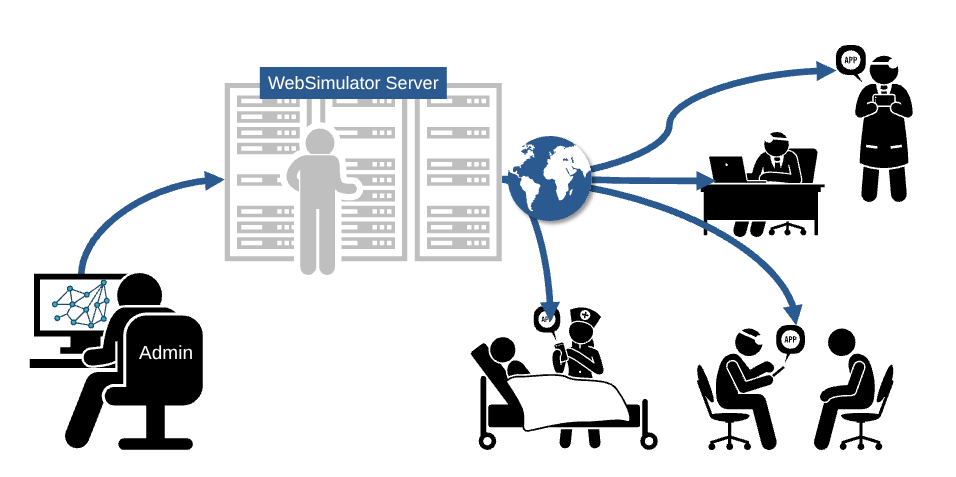
WebSimulator publishes BayesiaLab models as browser-based interfaces for stakeholder access, scenario simulation, real-time inference, and adaptive questionnaires. End-users can interact with the original Bayesian network model without using the full BayesiaLab modeling environment.
Scenario Interfaces
Turn models into guided experiences for scenario analysis.
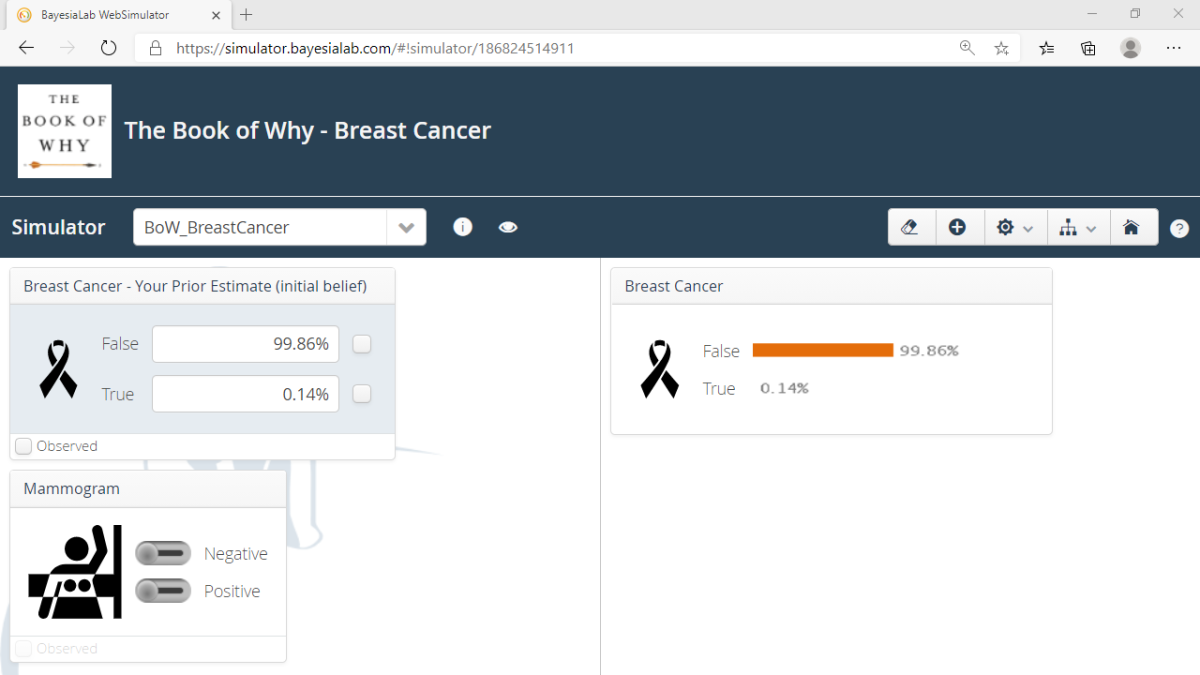
Publish a model as an interactive web page with selected inputs and outputs so users can test assumptions and compare outcomes without opening BayesiaLab.
Live Inference
See the model respond as evidence changes.
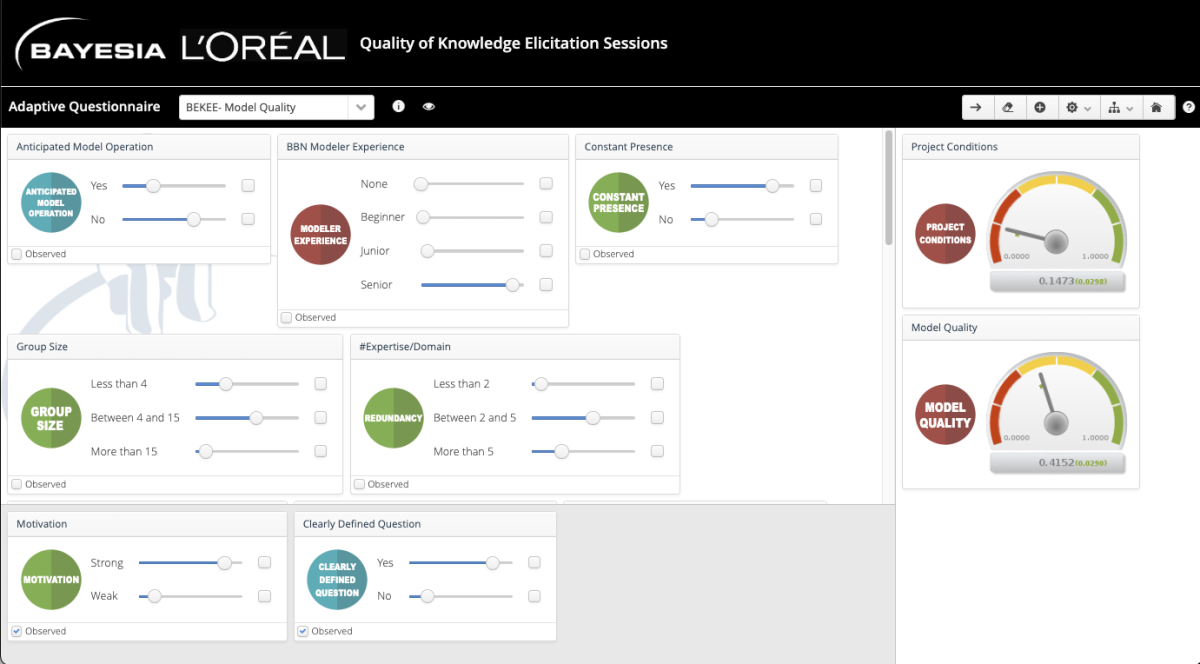
As users set evidence in the browser, output probabilities update immediately through Bayesia's inference engine running in the background.
Adaptive Questionnaires
Ask the next best question, not just the next question.
Adaptive questionnaires dynamically reorder inputs according to the information they bring to target variables, helping users reduce uncertainty efficiently.
Stakeholder Access
Deliver model-guided reasoning without desktop installation.
Share private or public simulators that work across desktop, tablet, and smartphone environments.
BEKEE
BEKEE is a structured web-based workflow for eliciting expert judgment when data are limited. It captures individual perspectives of stakeholders through questionnaires, supports formal comparison of viewpoints, and helps synthesize expert input into computable Bayesian network models.
Structured Elicitation
Organize the elicitation before the numbers are entered.
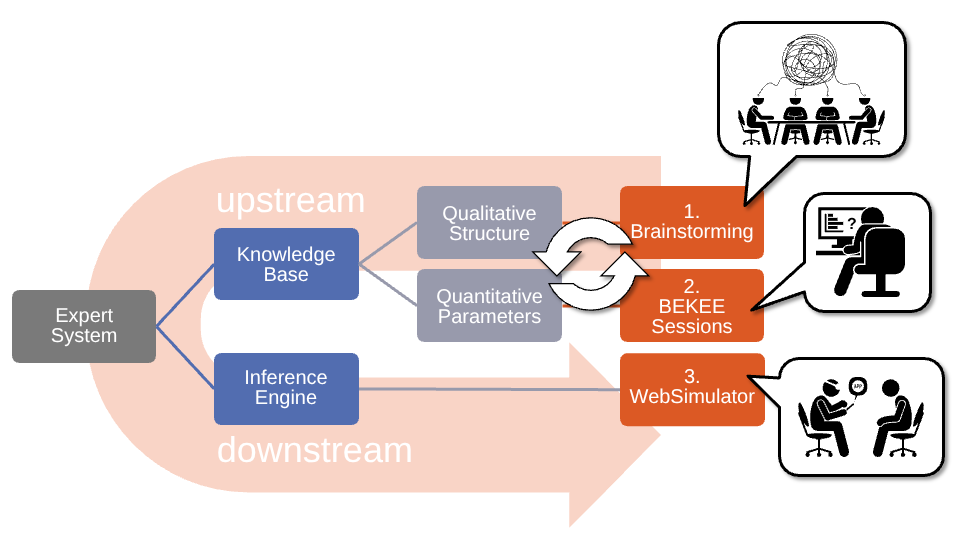
Treat elicitation as a modeling workflow, not a loose workshop artifact. BEKEE gives facilitators a disciplined way to frame questions, gather judgments, and prepare model-ready inputs.
Unified Model
Turn distributed judgment into a computable Bayesian network.
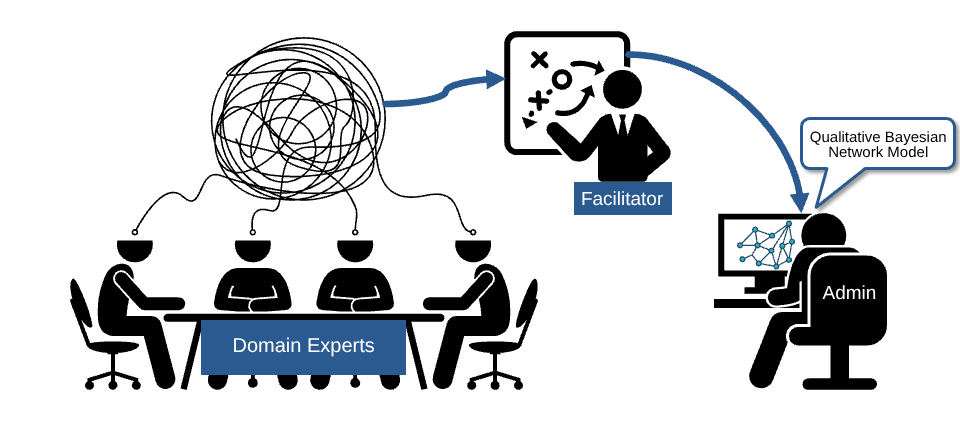
BayesiaLab can compile the elicited views into a unifying probabilistic model that supports simulation, reasoning, and what-if analysis.
Parallel Viewpoints
Capture disagreement without forcing premature consensus.
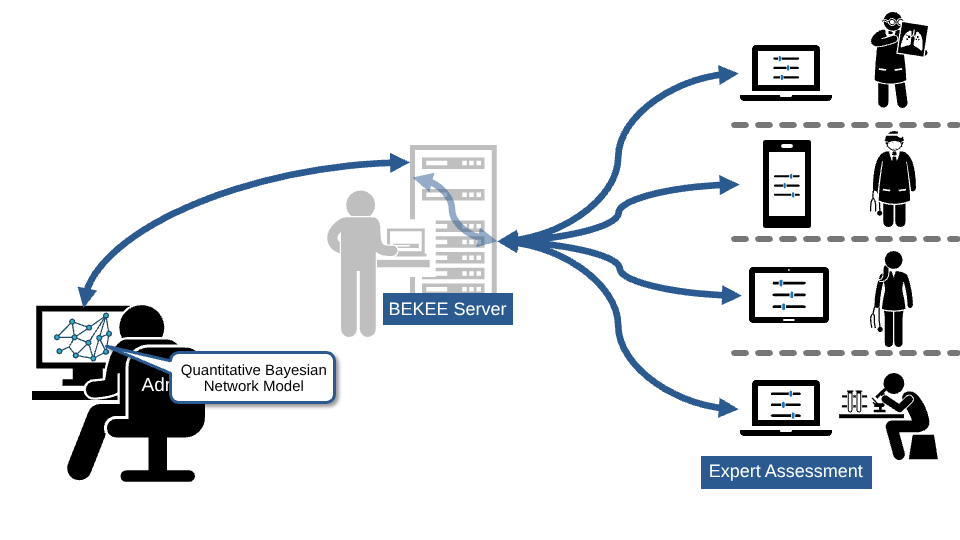
BEKEE queries experts individually, helping reduce group bias and preserving each participant's view so conflicting assessments can be compared formally and discussed productively.
Browser-Based Participation
Let experts contribute from anywhere.
Participants need only a web browser, making it easier to involve distributed expertise while keeping the modeling workflow connected to BayesiaLab.
Bayesia Engine API
Bayesia Engine API provides programmatic access to BayesiaLab model construction, learning, and inference. It allows BayesiaLab models to be used in embedded applications, production services, scoring pipelines, and enterprise workflows.
Application Embedding
Bring Bayesian network inference into your software stack.
Use Bayesia Engine API to call model-based inference from your own applications and services, turning reasoning with Bayesian networks into an operational capability.
Developer Workflows
Model, modify, estimate, and learn in code.
For software development teams, the Java APIs support modeling and inference, while the network learning option adds supervised and unsupervised learning workflows for generating models from data.
Production Services
Scale decision logic beyond manual analysis.
Use the REST API for straightforward inference over HTTPS or deploy Java-based capabilities for deeper integration and automation in production environments.
Operational Pipelines
Move from analyst workflows to repeatable services.
Connect Bayesia models to applications, scoring pipelines, internal tools, and larger decision-support architectures.
BEST
BEST provides a software ecosystem for developing, testing, deploying, and managing Intelligent Troubleshooting Assistants for complex systems (such as aircraft) that exhibit symptoms depending on their configuration and failure modes, such as degraded performance, fault codes, error messages, warning signals, abnormal noises or leaks, test outcomes, or unsuccessful repair attempts.
BRICKS
A probabilistic relational modeling framework for dealing with large-scale complex systems such as digital twins. BRICKS extends the Bayesian network approach to systems that are too large, too repetitive, or too interconnected for one-off flat models. It improves the modeling efficiency by reusing (as modeling patterns or classes) and assembling elementary 'bricks' (objects created from classes), and the inference efficiency by using innovative algorithms and advanced decompositions of probabilistic dependencies.
Representative Application Areas
Bayesia software is used in domains where uncertainty, partial evidence, causal assumptions, and expert judgment must be represented explicitly.
Risk, Reliability, and Cybersecurity
Model uncertain events, dependencies, controls, and mitigation strategies in systems where risk must be quantified and updated as evidence changes.
Public Policy and Health Economics
Represent assumptions, interventions, evidence, and outcomes in models that can be inspected, challenged, revised, and used for scenario analysis.
Market Research and Customer Analytics
Analyze survey, behavioral, and customer data with interpretable models that reveal drivers, segments, preferences, and decision-relevant dependencies.
Industrial Operations and Engineering Systems
Support diagnosis, root-cause analysis, reliability assessment, and operational decisions in complex technical and process-oriented systems.
Strategic Intelligence and Geopolitical Analysis
Combine reports, expert judgment, partial evidence, and causal assumptions in models built for reasoning under uncertainty.
Healthcare, Life Sciences, and Pharmaceuticals
Model biological, clinical, epidemiological, and pharmaceutical problems where evidence, mechanisms, and expert judgment must be integrated.


Get Started with Bayesian Networks and BayesiaLab
Start with the trial, the book, the user guide, or worked examples depending on how you prefer to evaluate the platform.
Download BayesiaLab
Start with a free trial and evaluate the modeling workflow directly.
Prices & Licensing

Choose the licensing path that fits your team, workflow, and deployment model.
BayesiaLab Installation Guide

Get BayesiaLab running on Windows, macOS, or Unix/Linux.
Examples & Tutorials

See real applications across health, risk, policy, engineering, analytics, and research.
Bayesia Academy

Courses, seminars, webinars, and events for analysts, researchers, and technical teams.
The BayesiaLab E-Book
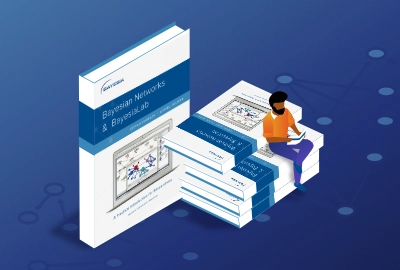
Use the e-book for a practical introduction to Bayesian networks and BayesiaLab.
Documentation and Learning Resources
Explore product documentation, tutorials, webinars, installation guides, licensing information, and release notes.
BayesiaLab User Guide
Dive into detailed feature-level documentation across the BayesiaLab workflow.
Key Concepts

Understand the foundational concepts behind Bayesia's modeling approach.
2027 Bayesia Summit

Join the free online Bayesia Summit on May 11-13, 2027, and learn from leading experts around the world.
Frequently Asked Questions

Get clear answers about Bayesia, Bayesian networks, and the ecosystem.